
Since you arrived in Los Cabos searching for the perfect wave, understanding the art of waxing the surfboard has become a total game changer today. If your feet are sliding during the pop-up, properly preparing your deck surface is the first thing you should master.
Although many beginners overlook the subtle details of application, reaching a professional grip level requires more than just rubbing a bar randomly across the fiberglass. By implementing advanced technical grip strategies, you will definitely ensure that your next session at Zippers remains completely wipeout free today.
While the 2026 season brings warmer currents to the Baja coast, knowing which specific wax product to choose becomes essential for maintaining your board’s traction. Stay with me to discover how to avoid common errors, because reading until the final tip will surely save your session.
Why Are Your Feet Slipping? 5 Common Mistakes When Waxing Your Surfboard
When discussing the fundamentals of waxing the surfboard, matching the wax temperature rating to the water is where most tourists usually fail. Because the Pacific currents fluctuate greatly, selecting the wrong wax density results in a slippery mess that ruins your entire morning ride.
Likewise, applying a tropical stick when the morning breeze is chilly creates a slick glass-like surface, making it impossible to stay standing on the board. Since maintaining a solid connection matters, you must always check the label, ensuring the temperature range matches the current local conditions.
Furthermore, many surfers forget that the basecoat provides the foundation, whose primary purpose always involves creating those tiny, essential bumps for your feet. Without building this initial texture correctly, the top layer will simply peel off, leaving you without any grip during the critical takeoff.
To prevent your wax from peeling off quickly, mastering the layering technique is vital; here we explain how to combine basecoat and topcoat for a professional grip. By following these expert surfboard guidelines, you will master the craft of perfectly maintaining your surf gear while enjoying the scenery.
The Importance of a Clean Surface for Traction
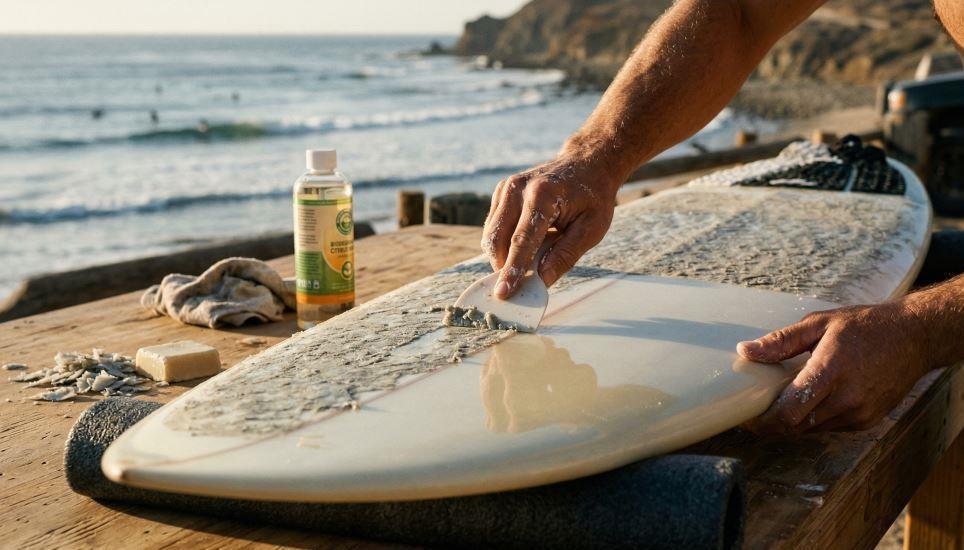
Before even thinking about waxing the surfboard again, completely removing the old residue is a step that you should never skip. Using a specialized scraper to clean the deck, which ensures better adhesion, will prevent the new layers from becoming a thick, sandy paste.
If you apply fresh wax over a dirty, oily surface, the material will slide off, making your surfing experience frustrating and potentially dangerous. Because cleanliness impacts your overall performance, taking time to strip the board remains a vital preparation ritual for every dedicated local surfer.
Likewise, using a citrus-based solvent helps dissolve the stubborn bits, leaving the fiberglass pristine and ready for a fresh, high-performance application. Since the 2026 environmental standards prioritize ocean safety, choosing biodegradable cleaners is the most responsible choice for protecting our beautiful Baja marine life.
Once the board is shining like it did the day you bought it, applying the first basecoat layer becomes an incredibly satisfying process. By starting with a blank canvas, you allow the wax to bond properly, guaranteeing a long-lasting grip during your long afternoon sessions.
Mastering the Pattern and Pressure Balance
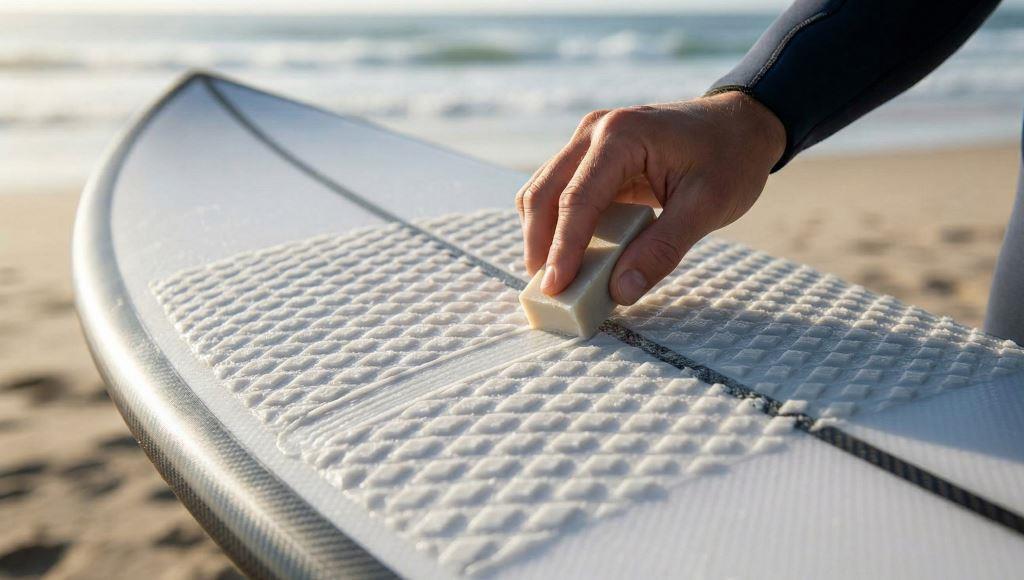
While many people rub the bar back and forth without thinking, creating a consistent pattern is essential for achieving the best results. When waxing the surfboard, applying a diagonal cross-hatch motion generates the structural bumps that your feet need for stability while turning hard.
Furthermore, the pressure you apply during this process determines the density of the texture, which ultimately affects your traction on the wave. By avoiding excessive downward force, you prevent the wax from flattening out, ensuring the honeycomb pattern remains sharp and effective for your session.
Likewise, ignoring the areas where your chest and hands rest can lead to slips during the pop-up, making your movements less precise. Because total deck coverage is necessary, extending the wax slightly beyond the standing area will improve your overall control while paddling through heavy sets.
Since 2026 technology has improved wax formulas significantly, less product is often needed to achieve the same level of stickiness. By focusing on quality over quantity, you will find that a well-applied thin layer provides much better traction than a thick, uneven and heavy mess.
Protecting Your Board from Solar Heat
Under the intense Cabo sun, leaving your equipment exposed will quickly ruin the effort you put into waxing the surfboard correctly. Once the wax begins to melt, it loses its texture and becomes a slick surface that offers absolutely no grip for your front foot.
Therefore, using a high-quality board bag with heat-reflective material is an essential investment for any surfer visiting the Baja peninsula. Because high temperatures degrade wax quickly, keeping your surfboard in the shade remains a critical maintenance task during those long, hot Mexican summer days.
Likewise, if you notice your wax turning glossy or translucent, it has already lost its effectiveness and should be replaced immediately. By staying proactive with maintenance, you avoid the embarrassment of sliding off a wave, ensuring your performance stays consistent throughout the entire morning swell.
Since the 2026 climate trends show increasing average temperatures, protecting your gear from UV rays is more important than ever before. By minimizing direct solar exposure, you extend the life of your wax job, allowing for more time surfing and less time reapplying product.
The Role of Seasonal Water Changes
Considering that the water temperature in Los Cabos varies between the Pacific and the Sea of Cortez, adjusting your wax is necessary. Before waxing the surfboard, checking the latest buoy data will tell you exactly which hardness you need to maintain a reliable connection with the deck.
If the water is unexpectedly warm, a cold-water wax will become mushy, making your footing very unstable during technical maneuvers or snaps. Because precision depends on traction, swapping your wax as the seasons transition ensures that you remain competitive in the lineup against the local rippers.
Furthermore, many advanced surfers in 2026 now carry multiple bars, whose different melting points allow for customized layering based on the forecast. By blending different wax types, you can create a surface that is both durable and sticky, providing the perfect balance for high-performance surfing.
Likewise, remembering to use a wax comb to roughen up the surface before paddling out is a simple yet effective professional trick. By re-exposing the fresh edges, you revitalize the old wax, giving you that extra grip needed for critical sections when the wind starts blowing.
Reflecting on the evolving relationship between surfing technology and traditional methods, it becomes evident that small adjustments in preparation lead to significant results. While the waves of Cabo challenge us, mastering the art of maintenance remains a timeless requirement for success during your next ocean adventure.