
Imagine yourself paddling out into the crystalline Pacific breaks, where the morning light hits the horizon and your board feels like an extension of your body. Mastering the selection of various surf wax types remains the most critical skill for maintaining stability during vertical drops.
Since the beginning of this vibrant 2026 season, local shredders have realized that a simple layer of paraffin no longer suffices for high-performance maneuvers. Understanding the complex chemical interaction between layers ensures that vibrant season has local shredders stoked while feet stay locked firmly on the deck.
While many beginners overlook the preparation process, seasoned veterans know that the secret to professional grip lies in the ritual of application. Stick around to discover how combining different formulas creates traction that will fundamentally transform your approach to catching the legendary Baja waves.
Understanding the Science of Surf wax types in Baja
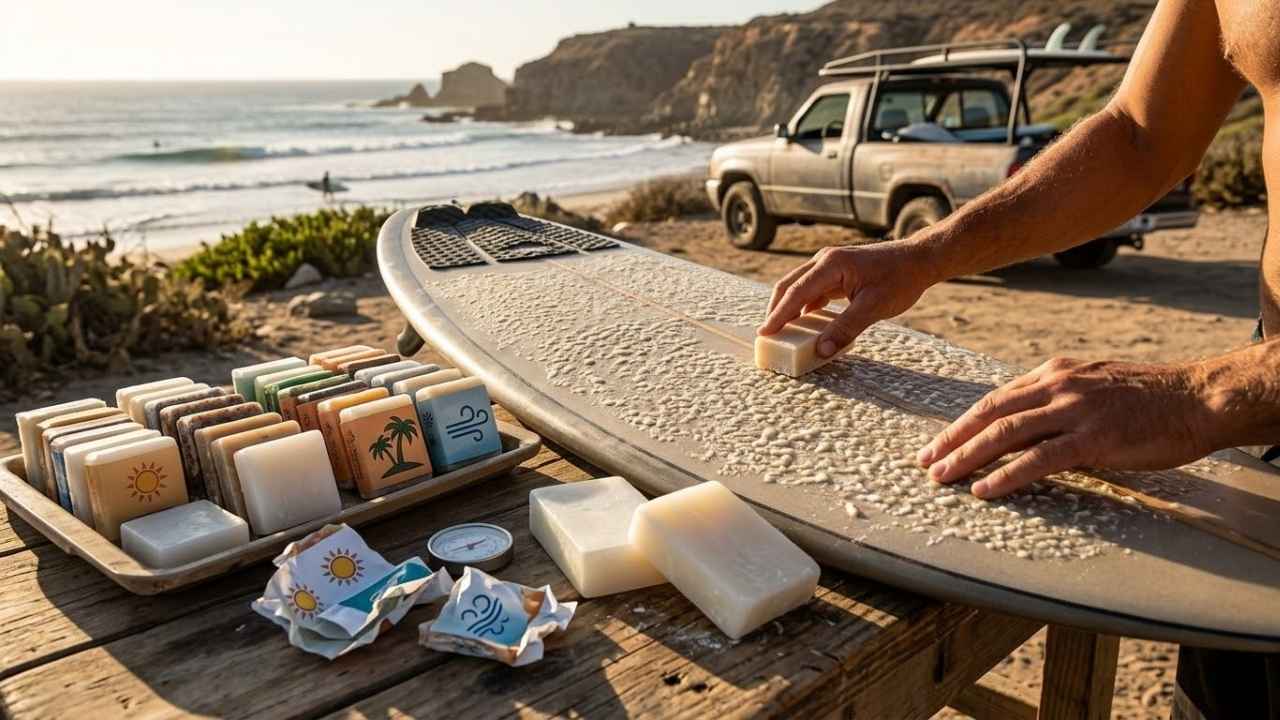
Navigating the diverse marketplace of 2026 requires a deep understanding of surf wax types because temperature variations significantly affect the material’s structural integrity. By choosing a specific density, you prevent the wax from melting or becoming too brittle, density affecting the material’s integrity constantly.
Starting with a solid foundation, surfers often utilize different surf wax types to build a textured surface that withstands the friction of aggressive carving. Because the water in Cabo fluctuates between seasons, selecting the appropriate temperature rating becomes essential for building a textured surface today before paddling.
Using specialized products like Mrs. Palmers Tropical provides that extra insurance against slipping when the heat becomes unbearable during July. Within the community, achieving a bumpy texture matters more than branding, providing extra insurance against slipping now during the morning session.
Although technology has advanced significantly, the classic paraffin blends found in surfboard wax types continue to dominate the professional circuits worldwide. Developing a keen eye for these subtle differences allows you to optimize your board’s surface area since classic paraffin blends continue dominating the industry.
The Essential Role of a Proper Basecoat
Before applying any final layers, ensuring a hard basecoat layer remains the foundational step for creating long-lasting wax bumps on your deck. Because this initial coat acts as the anchor, applying the wax with pressure helps establish a pattern that prevents the topcoat from sliding off completely.
Utilizing products like Sexwax Quick Humps allows for a specialized grip that caters to the specific water temperatures found in the Sea of Cortez. Since the basecoat is harder, it resists the friction generated by your movements while providing a specialized grip that caters specifically to you.
Furthermore, the interaction between different surf wax types depends heavily on the cleanliness of the board before the very first application. Using a clean surface ensures that paraffin adheres perfectly to board without the interference of salt, so cleanliness remains the foundational step for success.
While some might rush this process, taking the time to cross-hatch your basecoat provides the necessary texture for grip in challenging 2026 swells. Whenever you notice the bumps flattening, constantly re-evaluating your base layer becomes the most effective way to restore that professional, high-performance deck feel.
Applying Topcoat for Maximum Traction
Once the base is set, choosing the right topcoat from various surf wax types determines how much “stick” you will actually feel. Because the topcoat is generally softer, it provides the immediate suction required for late takeoffs while choosing the right topcoat now improves performance.
Applying a warm-water formula like Bubble Gum Original works perfectly for those scorching Baja afternoons when the water feels warm. Despite the heat, these specialized formulas maintain tackiness even when the water feels like a bathtub during the intense summer swell.
Moreover, the technique of applying the topcoat involves light, circular motions which maximize the surface area contact with your skin. By layering these different surf wax types correctly, you create a system where a tiered system of traction helps maintain control during maneuvers.
Frequently reapplying a thin layer before every session keeps the board fresh, ensuring that the grip remains at peak performance levels always. Since the 2026 competitive season demands perfection, avoiding old and dirty wax should be the priority for any surfer looking to improve their technical skills.
Maintenance and Removal in Tropical Climates
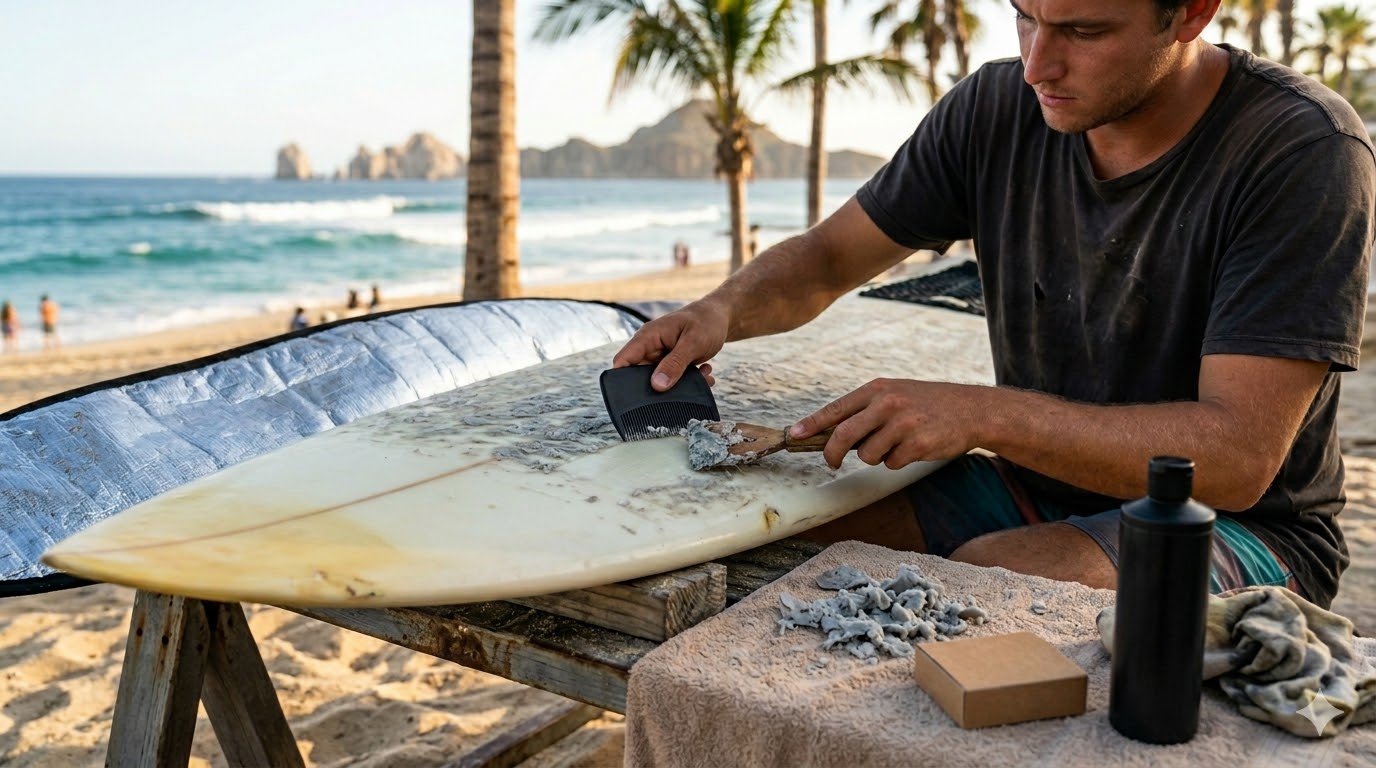
Managing your gear in the intense Cabo sun requires specific knowledge about how surf wax types react to prolonged ultraviolet exposure. Unless you store your board in a reflective bag, the wax will inevitably melt, causing the carefully constructed bumps lose their shape rapidly.
Periodically removing the old buildup allows you to inspect the fiberglass for dings while preparing for a fresh application of paraffin. Using a plastic comb or a specialized scraper ensures that you do not damage the delicate resin surface while stripping away the dirty, grey residue effectively.
Consequently, after cleaning the deck with a citrus-based solvent, the board becomes ready for another round of professional waxing to ensure traction. Integrating products such as Sticky Bumps Tropical into your routine guarantees that your setup remains ready for the powerful swells hitting Zippers.
Regarding the environmental impact of these materials, many surfers in 2026 are transitioning toward using biodegradable and eco-friendly options whenever possible. Choosing sustainable surfboard wax types helps preserve the pristine marine ecosystems of Baja California Sur, which remains a core value for our local community.
Environmental Trends in 2026 Surf Gear
Observing the evolution of traction technology reveals that the combination of surf wax types has become more scientific than ever before. Since athletes are pushing the boundaries, having a reliable connection point between feet and board defines success, showing how evolution of traction technology reveals progress.
Whenever you find yourself in the lineup, notice how the most successful surfers maintain their equipment with precision and constant attention. By mastering the art of the double-layer, you gain a competitive edge that allows for more aggressive rail-to-rail transitions in varying wave heights today.
Likewise, the diversity of different surf wax types available at local shops ensures every surfer finds their perfect match for the ocean. Whether you prefer a traditional feel or a modern synthetic grip, selecting the right chemical blend remains vital so every surfer finds their perfect setup.
Finally, remembering that your board is your most valuable tool encourages a habit of treating every wax application seriously for results. As we look forward to the upcoming swells, perfecting your waxing technique today will undoubtedly lead to more memorable and successful rides in the future.
Reflecting on the symbiotic relationship between a surfer and their equipment highlights the silent importance of that thin layer of paraffin. Ultimately, the mastery of traction transcends mere utility, becoming a meditative ritual that transcends mere utility while it prepares the mind and body for energy.