
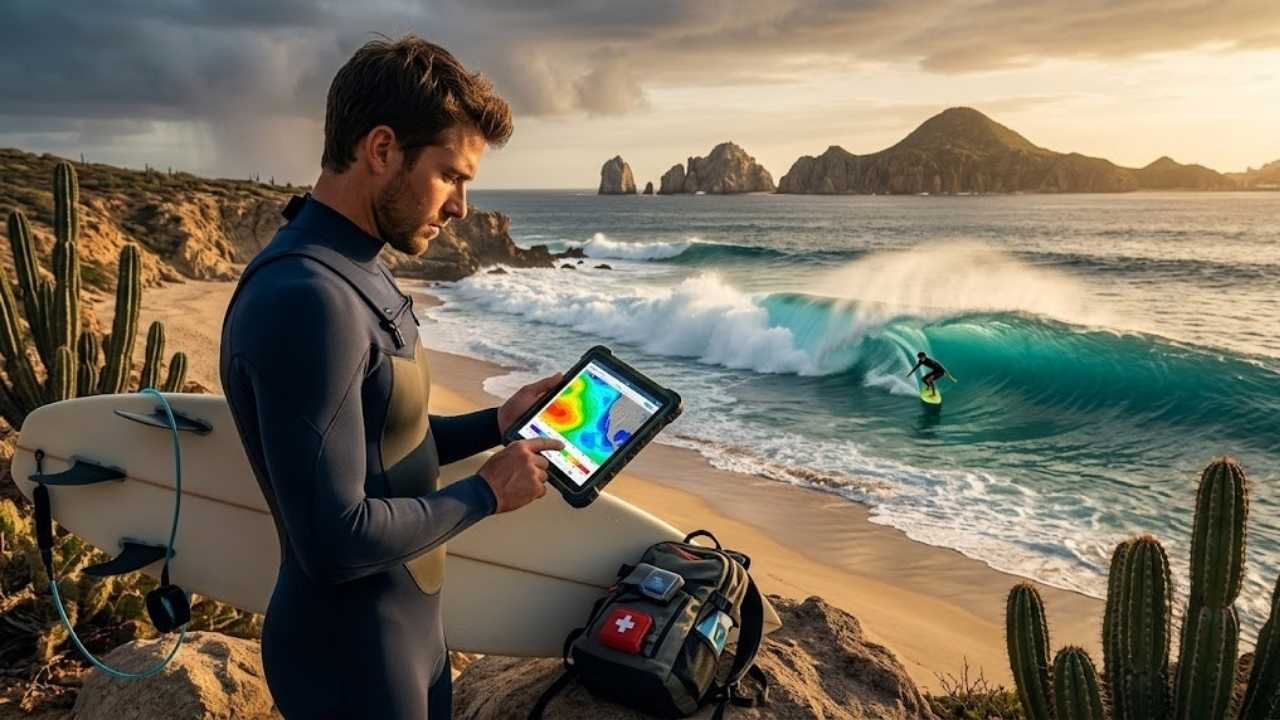
As tropical weather systems track northward, excitement during the Cabo hurricane surf season reaches high levels. Long-period ocean groundswells transform quiet beaches into adrenaline playgrounds. Understanding how distant tempests push perfect waves allows you to score legendary rides safely. Read through this entire guide to unlock peak swell secrets.
Along the sun-drenched coast of Baja California Sur, early autumn brings massive swells that charge world-class break points. Local surf charts often look overwhelming when tropical storms churn off the mainland. Decoding key variables like swell direction will reveal whether a storm delivers legendary barrels or chaotic white water tomorrow.
It is widely recognized that safety must remain your top priority whenever ocean energy rises suddenly. Navigating big wave conditions with smart preparation guarantees an unforgettable adventure across pristine Mexican waters. Essential ocean safety rules will protect you from hazardous currents while maximizing your peak session.
Navigating the Cabo Hurricane Surf Season like a Pro

Have you ever stared at a swell chart wondering if offshore winds will clean up the lineup? Tracking tropical systems passing far offshore provides vital clues about incoming wave height and consistency. Paying close attention to swell periods helps you filter out messy storm chop from long-period wave perfection.
Because distant hurricanes push groundswells across hundreds of ocean miles, timing your arrival is critical. The peak Cabo hurricane surf season usually delivers the largest and most consistent swells of the entire year. Monitoring real-time buoy updates online ensures you catch the exact window when lines wrap cleanly.
In the coastal area near San Jose del Cabo, south-facing reefs react dramatically to these distant hurricane tracks. Finding sheltered spots with light offshore winds turns a challenging swell into an epic day of surfing. Checking local wind forecasts each morning allows you to select the ideal beach.
Great satisfaction is found when you combine precise forecast interpretation with real-world observation on the sand. Learning how to evaluate swell angle accurately keeps you from wasting energy at flat or blown-out beaches. Patience remains your most valuable asset as you wait for set waves to groom the lineup.
How Offshore Hurricane Energy Translates into Perfect Waves

Did you know that storms hundreds of miles away create the cleanest waves in Los Cabos? Understanding the mechanics of ocean swell travel helps surfers anticipate energy arrival times down to the hour. Watching swell periods jump above fifteen seconds signals that solid, high-quality waves are heading toward Baja.
As a hurricane tracks north off the coast of mainland Mexico, it acts as a massive wave generator. When long-period swells reach shallow reefs, they transform into fast, hollow walls that delight experienced surfers. Analyzing swell trajectory across open waters allows you to target breaks that offer ideal shape.
During late summer in the East Cape, remote pointbreaks light up under south hurricane energy. Discovering secret spots becomes simple when reading your ultimate guide to summer surfing on the east cape and wild camping. Chasing uncrowded pointbreaks in Baja California rewards surfers who prepare for remote ocean conditions.
It is crucial to recognize that distance acts as a natural swell filter across open sea. Longer travel distances refine raw ocean energy into organized, clean wave sets with long lulls between sets. Swell period consistency determines wave quality when distant tropical tempests push water toward the coastline.
Reading Swell Period, Direction, and Wind Reports
Are you knowing how to identify the difference between groundswell and windswell on chart graphics? Evaluating wave direction relative to local bathymetry prevents unnecessary drives to flat beaches. Focusing on south and south-southwest angles yields awesome results during the Cabo hurricane surf season peak swells at top local breaks.
Therefore, monitoring swell period energy gives you an instant measure of wave power. A swell period above sixteen seconds translates to fast, heavy wave faces that break with tremendous force. Understanding energy density calculations in forecasts allows you to choose appropriate surfboard volume before paddling out.
On early morning surf checks, wind direction usually dictates which side of the cape will fire. Offshore breeze grooms the wave face into glass, creating ideal conditions for high-speed turns and tube rides. Identifying local land breezes in reports helps you catch clean waves before afternoon winds.
It is recommended that you cross-reference multiple ocean buoy models for maximum forecasting accuracy. Comparing global weather models reveals swell trends before they show up on local beach cameras. Relying on verified marine oceanographic data ensures you never miss a surprise pulse during peak hurricane windows.
Ocean Safety and Rip Current Management in Heavy Swells
Do you know what to do when strong rip currents pull you away from the shoreline? Recognizing powerful rip current ocean channels prevents panic when ocean water moves rapidly toward deep water. Paddling parallel to the shore line allows you to escape fast currents without draining your physical energy.
Consequently, sudden groundswell pulses during the Cabo hurricane surf season requires constant vigilance. Monitoring set intervals from the beach helps surfers calculate how long lulls last between massive sets. Taking time to observe wave behavior protects you from getting caught inside on unexpected cleanup sets.
In intense swell scenarios, recovering muscle stamina after heavy sessions becomes essential for long-term health. Checking out the best cabo surf retreats to heal body and mind this year offers great options. Integrating body healing into surf trips keeps you energized for consecutive wave days.
It is generally advised to surf with a trusted partner whenever conditions escalate near dangerous coastal reefs. Maintaining visual contact with your surf buddy provides an vital layer of safety when heavy sets clear the lineup. Carrying essential safety gear in your vehicle prepares you for unexpected emergency situations.
Choosing the Right Board and Equipment for Hurricane Swells
Look carefully at your surfboard quiver before paddling into heavy overhead hurricane waves this season. Selecting a board with extra paddling volume helps you catch fast-moving groundswells well before they pitch. Using heavy-duty leashes on bigger surf days prevents board loss and protects other surfers sharing the lineup.
When energy ramps up rapidly across the Cabo hurricane surf season, step-up surfboards offer superior ocean stability. Riding longer boards in powerful reef breaks provides control when descending steep wave faces. Inspecting fin boxes and leash strings avoids equipment failures when charging large sets at remote breaks.
At spots like Zippers or Monuments, choosing appropriate wax and rash guards enhances comfort during warm summer sessions. Applying tropical water wax onto board decks ensures maximum traction when popping up under pressure. Wearing solar protective rash guards daily shields your skin from intense southern sun rays.
It is understood that high-performance fins alter how your board handles thick storm energy. Upgrading to stiffer fin sets increases drive through critical bottom turns on overhead waves. Choosing equipment matched to wave conditions converts raw tropical storm power into clean, high-speed surf maneuvers effortlessly.
Final Reflections on Baja Summer Swells
Ready to turn swell reports into unforgettable sessions along Baja’s spectacular coastline? Mastering the art of surf report interpretation elevates your coastal travels from guesswork to precision timing. Navigating every big wave season with safety ensures you continue enjoying Baja’s magic for decades to come.
As long as tropical tempests roll across Pacific ocean tracks, respect for nature remains paramount. Embracing responsible ocean safety practices during the Cabo hurricane surf season fosters true confidence in the water. Experiencing perfect waves along southern Baja leaves an enduring impression on every surfer.